📞  — free, 24/7
— free, 24/7 — free, 24/7| Package | Price per Dose | Price | |
|---|---|---|---|
| 360 pills | C$1.65 | C$793.13 C$594.85 Free shipping | |
| 180 pills | C$1.77 | C$425.07 C$318.80 Free shipping | |
| 120 pills | C$2.00 | C$321.39 C$241.04 | |
| 90 pills | C$2.27 | C$272.14 C$204.10 | |
| 60 pills | C$2.53 | C$202.15 C$151.61 | |
| 30 pills | C$2.66 | C$106.25 C$79.69 | |
| 360 pills | C$2.88 | C$1,381.52 C$1,036.14 Free shipping | |
| 180 pills | C$2.92 | C$699.82 C$524.87 Free shipping | |
| 120 pills | C$2.97 | C$476.91 C$357.68 Free shipping | |
| 90 pills | C$3.07 | C$368.04 C$276.03 | |
| 60 pills | C$3.15 | C$251.40 C$188.55 | |
| 30 pills | C$3.56 | C$142.54 C$106.90 |
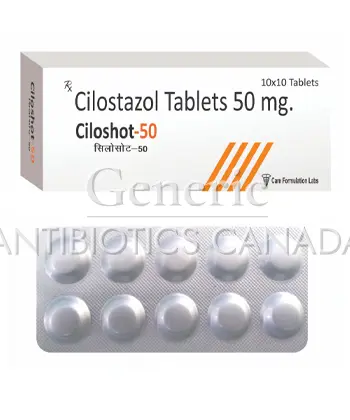
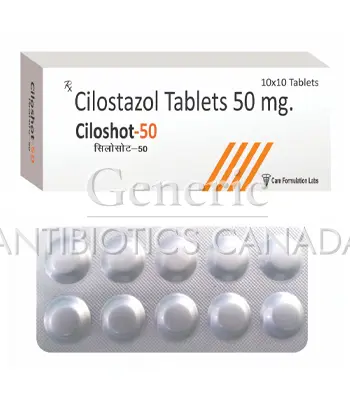
Cilostazol is a selective phosphodiesterase type 3 (PDE3) inhibitor with antiplatelet and vasodilatory activity. By inhibiting PDE3, it increases intracellular cyclic adenosine monophosphate (cAMP) in platelets and vascular smooth muscle, thereby reducing platelet aggregation and promoting vasodilation; it is primarily used to alleviate symptoms of intermittent claudication in peripheral arterial disease.
Cilostazol is administered orally and exhibits metabolism via hepatic cytochrome P450 enzymes, principally CYP3A4 and CYP2C19. The parent compound has an elimination half-life of approximately 11–13 hours, with active metabolites contributing to sustained activity. Dosing is commonly 100 mg twice daily after meals, and therapy is tailored to patient tolerance and response, with consideration of hepatic function and concomitant medications.
The drug belongs to the class of PDE3 inhibitors. Inhibition of PDE3 elevates intracellular cAMP in both platelets and vascular smooth muscle, yielding antithrombotic and vasodilatory effects. Clinically, cilostazol targets symptoms of intermittent claudication by improving walking distance and reducing leg pain during exertion.
Compared with other antiplatelet agents, cilostazol provides symptom relief through vasodilation in addition to platelet inhibition. It is not a first-line substitute for exercise therapy and risk factor modification but serves as an adjunct when claudication remains limiting despite structured rehabilitation and lifestyle measures.
Within the PDE3 inhibitor class, cilostazol is an oral agent aimed at peripheral vascular symptoms, whereas other PDE3 inhibitors such as milrinone and amrinone are predominantly used intravenously for acute heart failure. Milrinone and amrinone act as inodilators with short-term hemodynamic support, not for chronic claudication management.
Pharmacokinetics and safety differ markedly. Cilostazol undergoes hepatic metabolism with potential drug interactions via CYP3A4/2C19; milrinone and amrinone are largely renally cleared and carry risks of arrhythmias and hypotension when used IV. Bleeding risk with cilostazol is a consideration in patients on antiplatelet therapy, whereas the PDE3 inhibitors used in heart failure focus on inotropy and vasodilation with different risk profiles for arrhythmias and hypotension.
The approved indication for cilostazol is intermittent claudication due to peripheral arterial disease. It may improve pain-free walking distance and overall functional status when combined with supervised exercise and risk factor modification. It is not indicated for acute ischemic events or for relief of symptoms in non-claudication vascular conditions.
Its use requires consideration of contraindications and potential drug interactions. Notably, cilostazol is contraindicated in congestive heart failure of any etiology. Caution is advised in hepatic impairment or in combination with other antiplatelet or anticoagulant therapies due to bleeding risk. Patients should avoid otherwise unnecessary CYP3A4/2C19 inhibitors that could elevate cilostazol exposure.
Below is a concise comparison of cilostazol with two other PDE3 inhibitors often encountered in pharmacologic practice. The table highlights route, primary use, mechanism, and major cautions.
| Agent | Route | Primary use | Mechanism | Major contraindications/cautions |
|---|---|---|---|---|
| Cilostazol | Oral | Intermittent claudication (peripheral arterial disease) | PDE3 inhibition with antiplatelet and vasodilatory effects | Congestive heart failure of any etiology; caution with hepatic impairment and antiplatelet/anticoagulant therapy; CYP3A4/2C19 interactions |
| Milrinone | Intravenous | Acute decompensated heart failure (inotropy/vasodilation) | PDE3 inhibition leading to inotropy and vasodilation | Severe hypotension; significant ventricular arrhythmias; hypersensitivity; renal impairment requiring dose adjustment |
| Amrinone (Inamrinone) | Intravenous | Short-term management of congestive heart failure | PDE3 inhibition with inotropic and vasodilatory effects | Severe hypotension; arrhythmias; hypersensitivity; thrombocytopenia risk |
Common adverse effects of cilostazol include headache, diarrhea, dizziness, palpitations, and edema. The antiplatelet effect can increase bleeding risk, especially when combined with anticoagulants or other antiplatelet agents. Dose adjustments and monitoring are advised in hepatic impairment and in the setting of polypharmacy.
Important safety considerations include the contraindication in heart failure of any type and the potential for interactions with strong CYP3A4 or CYP2C19 inhibitors or inducers. Clinicians should assess bleeding risk, monitor for signs of tachycardia or edema, and review concomitant therapies to avoid adverse events or reduced efficacy. Pregnancy and lactation require individual risk assessment and counseling.
14–21 days. Free from C$280.12 .
5–9 days. C$42.02
−10% when paying with cryptocurrency.
−10% on all repeat orders.
All orders are packed in neutral, unbranded boxes with no product name on the outside.