📞  — free, 24/7
— free, 24/7 — free, 24/7| Package | Price per Dose | Price | |
|---|---|---|---|
| 180 pills | C$1.13 | C$204.10 | |
| 120 pills | C$1.26 | C$151.61 | |
| 90 pills | C$1.48 | C$132.17 | |
| 60 pills | C$1.65 | C$99.13 | |
| 30 pills | C$1.94 | C$58.30 | |
| 180 pills | C$2.27 | C$410.17 Free shipping | |
| 120 pills | C$2.43 | C$291.58 Free shipping | |
| 90 pills | C$2.64 | C$237.15 | |
| 60 pills | C$2.82 | C$169.11 | |
| 30 pills | C$3.11 | C$93.29 |
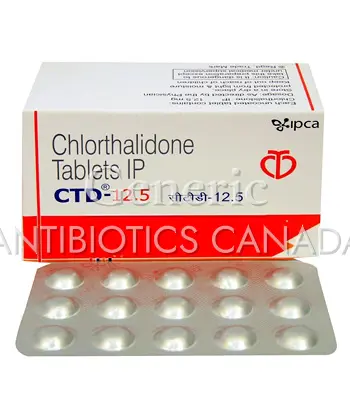
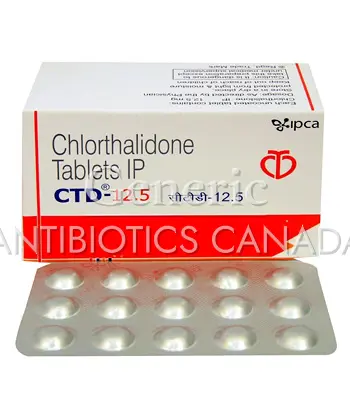
Chlorthalidone was introduced in the 1960s and remains one of the most widely prescribed diuretics for hypertension and edema. It is a long-acting thiazide-like diuretic that inhibits the distal convoluted tubule Na+/Cl- cotransporter, promoting sustained natriuresis and gradual reductions in plasma volume and vascular resistance. The antihypertensive benefit extends beyond diuresis, arising in part from direct effects on peripheral vessels that lower systemic resistance.
Pharmacodynamically, chlorthalidone causes continued sodium and water loss with modest early diuresis but persistent blood pressure lowering over weeks. It is well absorbed after oral dosing and exhibits high protein binding. The drug has a long elimination half-life, typically 40–60 hours, enabling once-daily dosing and a sustained therapeutic effect. Renal excretion is the major pathway; hepatic metabolism is limited and inactive metabolites predominate.
The principal indication is hypertension, where chlorthalidone can be used as monotherapy or in combination with other antihypertensives. It also treats edema associated with congestive heart failure, cirrhosis, nephrotic syndrome, or volume overload from other causes. In clinical practice, chlorthalidone has demonstrated cardiovascular risk reduction in hypertensive patients and remains a preferred option in several guideline recommendations.
In addition, thiazide-like diuretics reduce urinary calcium excretion, making chlorthalidone helpful for patients with hypercalciuria or recurrent calcium-containing stones. It may offer ancillary benefits for bone health in some individuals by reducing urine calcium loss, though it should not replace dedicated osteoporosis therapies where indicated.
Chlorthalidone is usually given once daily, often in the morning to minimize nocturia. Dosing commonly begins with 12.5–25 mg daily, with adjustments based on blood pressure response and tolerability. Some patients may require higher or lower doses, guided by clinical effect and electrolyte monitoring.
Patients with reduced renal function may require dose reductions. Elderly individuals should be monitored closely for electrolyte disturbances, dehydration, and falls. Tablets may be taken with or without food; maintain consistency in daily timing and avoid abrupt changes in fluid intake or diuretic use without medical guidance.
Contraindications include anuria and known hypersensitivity to chlorthalidone or other sulfonamide-derived drugs. Caution is advised in significant renal impairment, gout, severe electrolyte disturbances, pregnancy, or lactation. The drug should be used only under medical supervision in these settings.
Before and during treatment, monitor electrolytes (potassium, sodium), uric acid, glucose, and renal function. Use with NSAIDs may blunt diuretic efficacy and raise renal risk; interactions with lithium, digoxin, and other antihypertensives require careful monitoring. Educate patients about orthostatic dizziness and the need to rise slowly from a seated or lying position.
The most frequent adverse effects are electrolyte disturbances, especially hypokalemia and hyponatremia, which can cause weakness, cramps, confusion, or arrhythmias if severe. Other common events include dehydration, dizziness, orthostatic hypotension, and increased serum uric acid that may trigger gout flares.
Photosensitivity, headaches, and mild gastrointestinal upset are reported occasionally. Rare but serious effects include severe hypokalemia with cardiac risk, significant dehydration, renal function deterioration, and hypersensitivity reactions. Seek prompt medical attention for signs of an allergic reaction, persistent swelling, or a gout attack.
14–21 days. Free from C$280.12 .
5–9 days. C$42.02
−10% when paying with cryptocurrency.
−10% on all repeat orders.
All orders are packed in neutral, unbranded boxes with no product name on the outside.